
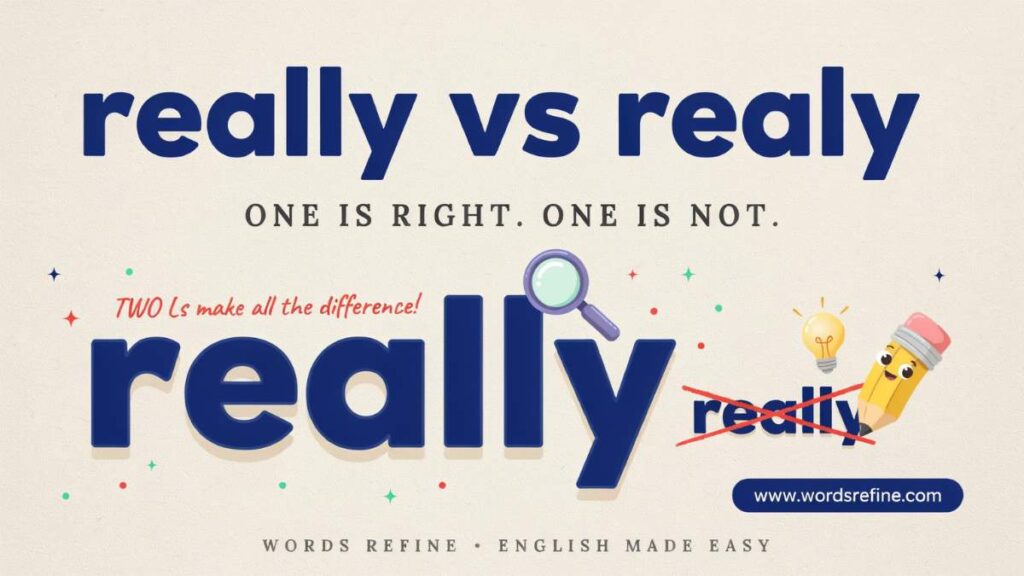
Have you ever wondered whether really needs one L or two? This tiny spelling confusion can easily catch you off guard, especially when you are typing quickly. The difference between really vs realy is simple really is the correct spelling, while realy is a common misspelling. The word really functions as an adverb to express emphasis, sincerity, or surprise. Although dropping one L might seem like a harmless shortcut, it creates an error in standard English. So, how can you remember the correct spelling and use it confidently? Let’s explore the meaning, usage, common mistakes, and an easy trick to keep both Ls in place.
Quick Answer Really vs Realy?
really vs realy is the correct spelling. It’s an adverb that can mean actually, genuinely, or very. You can also use it to express surprise, doubt, or disbelief.
Realy is an incorrect spelling in standard English. It may appear in casual messages or online conversations, but that doesn’t make it correct.
Here are a few examples:
- I really enjoyed the movie.
- Are you really moving to another city?
- She is really good at painting.
Remember to include both Ls when spelling really: R-E-A-L-L-Y.
Learn the difference between confusing more English words
Ingenuine vs Ungenuine Which One Is Correct ?
What Does Really Mean?
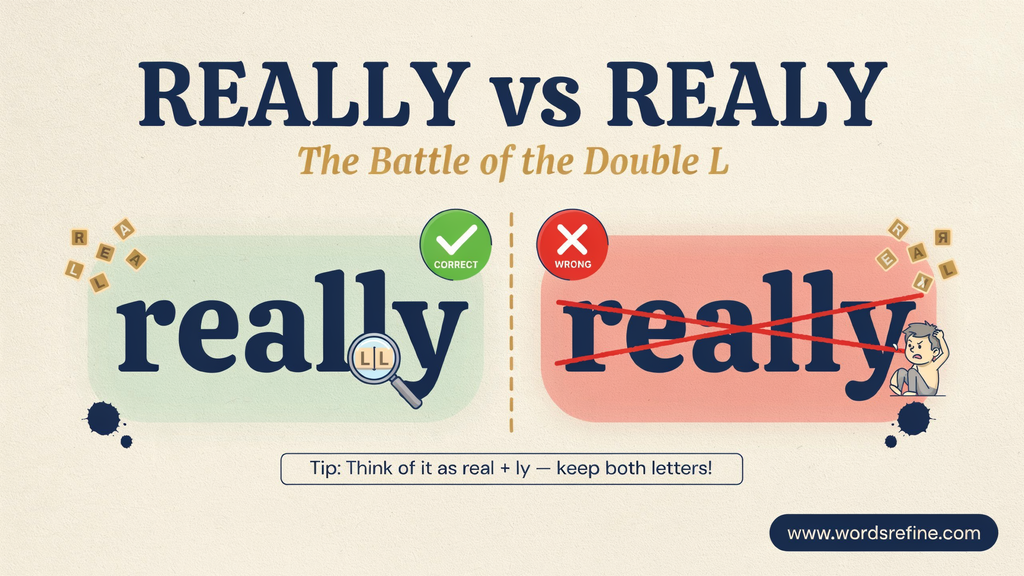
Really is an adverb that adds emphasis or extra meaning to a sentence. Depending on the context, it can describe how strongly you feel about something, confirm that something is true, or show that you find something surprising.
The word comes from real and the suffix ly. Together, they form really, which commonly means actually, genuinely, or to a great degree.
Really Means Actually or Genuinely
Use really when you want to show that something is true or genuine. It can help you emphasize that an event happened or that someone honestly feels a certain way.
For example:
- I really saw a bear near the campsite.
- She really wants to become a doctor.
- Do you really believe that story?
- He really works at the hospital.
In these sentences, really confirms that the information is genuine. It adds emphasis and makes the speaker’s meaning clearer.
Really Means Very or Extremely
You can also use really to strengthen an adjective or another adverb. It tells the reader that something has a high degree of a particular quality.
For example:
- The weather is really beautiful today.
- This coffee tastes really good.
- She runs really fast.
- That was a really difficult question.
In these examples, really works much like very or extremely. It makes the description stronger without changing its basic meaning.
Learn the difference between tricky grammar more words
Cadaver vs Corpse Which One Is Correct ?
Really Expresses Surprise or Disbelief
Sometimes, one word is enough to show exactly how you feel. Really? is a good example. People often use it when something surprises them or sounds difficult to believe.
For example:
- Really? You won the competition?
- Did he really say that?
- Really! I didn’t expect to see you here.
- Are you really going to quit your job?
The meaning often depends on your tone. You might say really? with excitement, curiosity, disbelief, or even a little sarcasm. The word stays the same, but your reaction changes.
Is Realy a Correct English Word?
No, realy is not a correct spelling in standard English. The correct form is really, with two Ls.
People sometimes leave out the second L because they assume the word follows a simple pattern: real + y. However, the correct spelling comes from adding the suffix -ly to real, giving us really.
For example:
Incorrect: I realy like this song.
Correct: I really like this song.
Incorrect: She is realy happy today.
Correct: She is really happy today.
Most readers will understand what you mean when you write realy, but it’s still a spelling mistake. Whether you’re writing a school assignment, a business email, or a casual message, use really.
Learn the difference between commonly mixed-up more words
Ironic vs Unironic Meaning, Differences, and Correct Usage
Why Do People Misspell Really vs Realy?
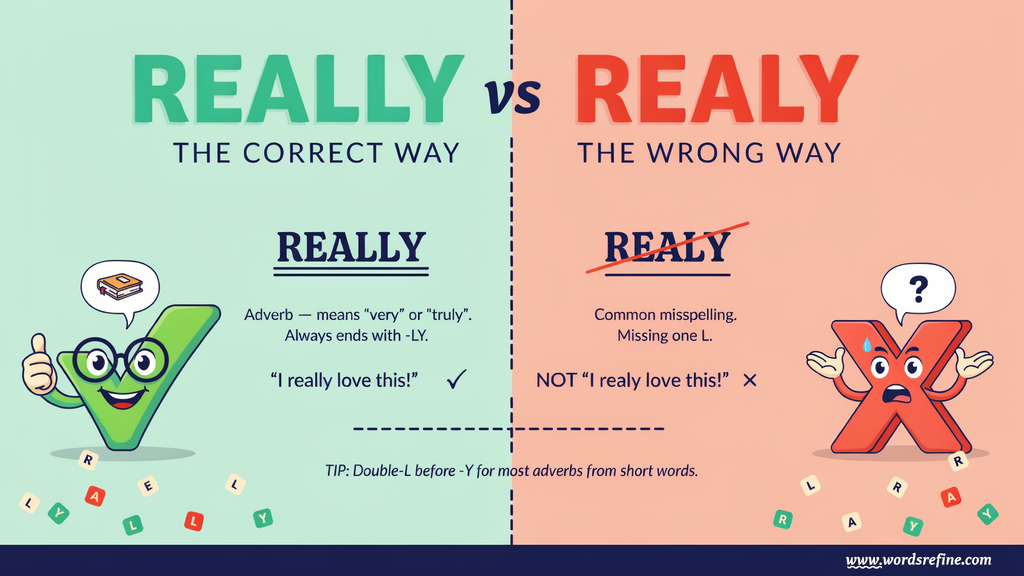
This mistake is easy to make because really vs realy the spelling doesn’t always match what people expect. A few common habits can lead to it.
Typing too quickly is one reason. When you are rushing to finish a message, it’s easy to skip a repeated letter. Your fingers move quickly, and sometimes your proofreading doesn’t keep up.
Pronunciation can also cause confusion. The two Ls don’t create two separate sounds, so you might not notice that the word needs both letters. English spelling has plenty of little surprises like this.
Autocorrect can make things more confusing, too. Some typing tools fix spelling mistakes automatically, while others leave them untouched. That’s why it’s worth checking your writing before sending or publishing it.
A simple way to remember the correct spelling is to start with real and add -ly. The result is really, with both Ls intact.
What’s the Difference?
The difference really vs realy is simple really is the correct English word, while realy is a misspelling.
Really is an adverb. You can use it to add emphasis, describe the degree of something, or confirm that something is genuine.
Realy has no accepted meaning or use as an alternative spelling in standard English.
For example:
Correct: I really appreciate your help.
Incorrect: I realy appreciate your help.
Correct: The children were really excited about the trip.
Incorrect: The children were realy excited about the trip.
If you’re ever unsure, remember that really always has two Ls.
How to Use Really in a Sentence
Really is a flexible word. You can use it in different parts of a sentence depending on what you want to emphasize. The trick is to place it where it sounds natural and makes your meaning clear.
Before an Adjective
One common use is placing really before an adjective. It strengthens the description and shows how strongly a particular quality applies.
For example:
The movie was really interesting.
My new shoes are really comfortable.
That restaurant serves really delicious food.
I’m really tired after work.
In each sentence, really adds emphasis to the adjective that follows it.
Before a Verb
You can also place really before a verb to emphasize an action, feeling, or opinion. Its position depends on the sentence and the verb you’re using.
For example:
I really love this book.
She really understands the problem.
They really enjoyed their vacation.
We really need your help.
Here, really strengthens the meaning of the verb. It shows that the feeling or action is genuine or important.
Before Another Adverb
Really can also modify another adverb. This helps you emphasize how someone performs an action.
For example:
He speaks really clearly.
She finished the assignment really quickly.
The baby slept really peacefully.
You handled the situation really well.
In these sentences, really adds emphasis to clearly, quickly, peacefully, and well.
In Questions
When you want to confirm something or express surprise, you can use really in a question.
For example:
Are you really leaving tomorrow?
Did she really finish the project?
Do you really think that’s a good idea?
Can he really speak five languages?
These questions often express curiosity or disbelief. Your tone helps the listener understand exactly what you mean.
Learn the difference between confusing word pairs
Enflamed vs Inflamed Which One Is Correct ?
At the Beginning of a Sentence
You can also begin a sentence with really when you want to express a reaction or make a point more strongly.
For example:
1Really, I didn’t expect that to happen.
2Really, there’s no need to worry.
3Really, this is the best solution we have.
4Really, you should give the idea another chance.
This use is common in everyday conversation. In formal writing, however, a more precise expression may sometimes communicate your point better.
Learn the difference between often confused words
Suffix vs Postfix Which One Is Correct?
What’s the Difference?
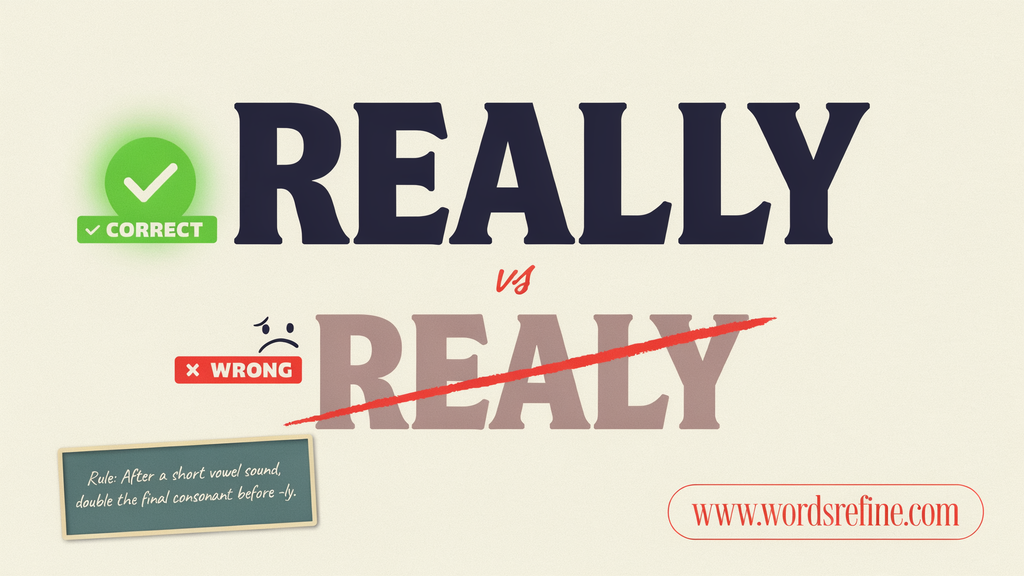
really vs realy and real look similar, but they serve different grammatical purposes. Real is an adjective, while really is an adverb. Understanding the difference makes it easier to choose the right word.
Use real when describing a person, object, feeling, or situation. It tells the reader that something is genuine, authentic, or not imaginary.
For example:
This is a real diamond.
She told me a real story.
His fear was real.
We need a real solution to this problem.
Use really when you want to add emphasis to an adjective, verb, or another adverb.
For example:
This diamond is really expensive.
She really enjoyed the story.
His fear was really strong.
We really need to solve this problem.
A simple way to remember the difference is to look at what you’re describing. If you’re describing a noun, real is usually the right choice. If you’re emphasizing an action or description, really is often the better option.
You may also hear people say real good instead of really good in casual American conversation. Although this expression is common in informal speech, really good is the standard choice in formal writing.
Learn the difference between often confused words
Trebled vs Tripled Which One Is Correct?
Common Mistakes When Using Really
Although really is a familiar word, it’s easy to make mistakes when using it. Paying attention to spelling and sentence structure can help you avoid them.
Writing Realy Instead of Really
This is one of the most common mistakes. People accidentally leave out one L and write realy instead of really.
Incorrect: I am realy excited about the news.
Correct: I am really excited about the news.
Remember that really always contains two Ls.
Confusing Real vs Really
Real vs really aren’t interchangeable. Using one in place of the other can make a sentence sound awkward or grammatically incorrect.
Incorrect: The food tastes real delicious.
Correct: The food tastes really delicious.
Incorrect: This is a really story.
Correct: This is a real story.
Use real to describe a noun and really to modify an adjective, verb, or adverb.
Using Really Too Often
Really is useful, but repeating it in every sentence can make your writing sound repetitive. When you use it too often, your descriptions may lose their impact.
Consider this example:
I really liked the restaurant. The food was really good, and the service was really excellent.
A more natural version would be:
I loved the restaurant. The food was delicious, and the service was excellent.
There’s no need to remove really from every sentence. Just use it when it adds something meaningful.
What Are Some Alternatives to Really?
Sometimes, another word expresses your meaning more clearly. The best alternative depends on what you’re trying to say.
When you mean actually or in truth, you can use genuinely, truly, honestly, or indeed.
For example:
I genuinely appreciate your support.
She truly believes in her work.
Honestly, I didn’t expect that result.
When you use really to mean very or extremely, you can choose a more descriptive word.
For example:
The weather is extremely cold.
The performance was remarkably impressive.
The instructions were particularly helpful.
When you want to express sincerity, honestly or sincerely may be a better choice.
For example:
I sincerely hope everything goes well.
Honestly, I think you made the right decision.
However, these words don’t always have exactly the same meaning. Choose the one that fits your sentence rather than replacing really without considering the context.
How to Remember the Correct Spelling of Really
If you often write realy by mistake, a simple spelling trick can help.
Start with real and add the suffix -ly. The result is really, with two Ls.
Think of it this way: one L belongs to real, and the other comes from -ly. Both stay in the word.
You can also practice by writing really a few times and using it in everyday sentences.
For example:
I really like this book.
She is really helpful.
That was a really good idea.
A little practice can make the correct spelling feel natural. Eventually, you’ll type really without having to stop and think about it.
Learn the difference between basic English word mistakes
Hierarchical vs Hierarchal Which One Is Correct?
Is Really Appropriate in Formal and Informal Writing?
Yes, really works in both formal and informal writing. However, how often you use it depends on the situation.
In everyday conversations, text messages, and social media posts, really sounds natural. People use it to express excitement, emphasize opinions, and react to surprising information.
For example:
I’m really happy to see you!
That movie was really funny.
Do you really mean it?
Really is also acceptable in professional writing. However, a more precise word can sometimes make your message stronger.
For example:
Less precise: The results were really impressive.
More precise: The results were exceptional.
Less precise: We really appreciate your assistance.
More precise: We sincerely appreciate your assistance.
You don’t have to avoid really in professional communication. Just make sure it adds meaning rather than taking up space.
Learn the difference between commonly misused words
Taylored vs Tailored Which One Is Correct?
Practice Session Really vs Realy
Complete each sentence by filling in the blank with the correct spelling really vs realy.
- I ______ enjoyed the movie last night.
- Are you ______ going to move to another city?
- She is ______ good at solving difficult problems.
- We ______ appreciate your support.
- The weather was ______ cold yesterday.
- He didn’t ______ understand the instructions.
- That was a ______ interesting experience.
- I ______ need to finish this assignment today.
- Is this restaurant ______ as good as everyone says?
- They were ______ surprised by the announcement.
- You should ______ check your answers before submitting the test.
- The children ______ loved the science experiment.
- I’m ______ happy with the results.
- Did you ______ meet your favorite author?
- This book is ______ worth reading.
- She ______ wants to become a doctor.
- The team played ______ well during the final match.
- I can’t believe you ______ remembered my birthday!
- He is ______ passionate about teaching.
- We ______ enjoyed spending time with our friends.
- Are they ______ planning to visit us?
- The instructions were ______ easy to follow.
- I ______ didn’t expect such a wonderful surprise.
- This painting looks ______ beautiful in natural light.
- You should ______ think carefully before making that decision.
Answers
- Really
- Really
- Really
- Really
- Really
- Really
- Really
- Really
- Really
- Really
- Really
- Really
- Really
- Really
- Really
- Really
- Really
- Really
- Really
- Really
- Really
- Really
- Really
- Really
- Really
Here’s a trusted source for clear more words Comparison:
FAQs
When Should You Use Really?
Use really when you want to emphasize an adjective, verb, or another adverb. You can also use it to confirm something or express surprise. For example, “I really enjoyed the concert” emphasizes how much you enjoyed the experience.
Is “I Really Am Sorry” Correct?
Yes, “I really am sorry” is grammatically correct. The word really adds emphasis and makes the apology sound more sincere. It can also reassure someone that you genuinely regret what happened.
What Does “Really Really” Mean?
Really really is an informal way to add extra emphasis. Repeating the word strengthens the feeling or description. For example, “I’m really, really happy” expresses strong excitement. In polished writing, however, using really once or choosing a more precise word often sounds better.
Is Really Stronger Than Very?
Not always. Both words add emphasis, but their effect depends on the context. Really often sounds more conversational and personal, while very has a more neutral tone. For example, “I’m really excited” and “I’m very excited” express similar feelings.
Which Is Correct Realy vs Really?
Really is the correct spelling. really vs realy is a misspelling and isn’t accepted in standard English. Always include both Ls when writing really.
Is “I Really Do Correct Grammar” Correct?
The sentence is grammatically possible, but its meaning may be unclear. If you mean that you actively fix grammatical mistakes, say, “I really do correct grammatical errors.” If you’re asking whether a sentence follows grammar rules, say, “Is this sentence grammatically correct?”
How Do You Say Really in a Formal Way?
The best formal alternative depends on your intended meaning. You can use genuinely, sincerely, particularly, extremely, or indeed. For example, instead of writing “I really appreciate your help,” you could say, “I sincerely appreciate your help.”
Is “I’m Sorry” Grammatically Correct?
Yes, “I’m sorry” is grammatically correct and sounds natural in everyday English. You can use it to apologize, express sympathy, or acknowledge a mistake. It’s also a complete sentence, even though it uses a contraction.
How Do I Say “I’m Really Really Sorry”?
You can say “I’m truly sorry,” “I’m deeply sorry,” or “I sincerely apologize.” These expressions communicate genuine regret without repeating really. For a more personal apology, try, “I’m genuinely sorry for hurting you.”
What Can You Say Instead of “Really Sorry”?
You can use deeply sorry, truly sorry, genuinely sorry, sincerely sorry, or terribly sorry. For example, “I’m deeply sorry for the inconvenience” works well in a professional situation, while “I’m truly sorry I hurt your feelings” sounds more personal.
What’s a Better Word for Really?
There isn’t one perfect replacement because really can express different meanings. Use genuinely or truly to show sincerity, extremely or exceptionally to emphasize degree, and actually or indeed to confirm something. Choose the word that fits your sentence naturally.
Is It Spelled Realy vs Really?
The correct spelling is really, with two Ls. Realy is incorrect, even though people sometimes type it by mistake. Remember that really comes from real plus -ly, which can help you keep both Ls in place.
What Does Realy Mean?
Realy has no recognized meaning as a standard English word. It’s usually a misspelling of really, which means actually, genuinely, or very. If you see realy in a message, the writer most likely intended to write really.
What’s a Slang Word for Really?
Common informal alternatives include super, totally, seriously, and legit. For example, you might say, “That movie was super funny” or “I’m seriously excited.” The best choice depends on the conversation and the tone you want.
What Is a Female Lover Called?
A woman in a romantic relationship may be called a girlfriend, partner, sweetheart, or beloved, depending on the relationship. The word lover can describe someone involved in a romantic or intimate relationship. It doesn’t have a separate form specifically for women.
Learn the difference between everyday English mistakes
Siked vs Psyched Which One Is Correct?
Conclusion
The difference between really vs realy comes down to one small letter, but that missing L makes all the difference. Really is the correct spelling, whether you’re emphasizing a point, expressing genuine feelings, or reacting to surprising news. Realy, however, is a misspelling and has no place in standard English.
Here’s an easy way to remember it: real + ly = really. Both Ls stay, so don’t let one disappear when you’re typing in a hurry. With this simple spelling rule in mind, you’ll avoid a common mistake and make your writing clearer. After all, getting really right is really not that difficult!

Diora AJS she is an experienced blogger and passionate English language enthusiast at Words Refine. With a keen eye for language and a love for clear communication, she writes practical content about grammar, word meanings, usage, and commonly confused terms. Her goal is to make English easier to understand through clear explanations and relatable examples, helping readers write accurately and communicate with confidence.